We didn’t know we were preserving a culture—we were just living it





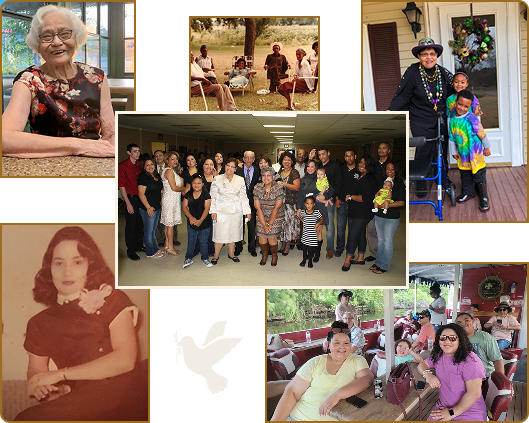





Discover the powerful legacy of Marie Thérèse Coincoin and the Metoyer family, whose resilience, faith, and vision helped shape Creole culture along Louisiana’s Cane River.
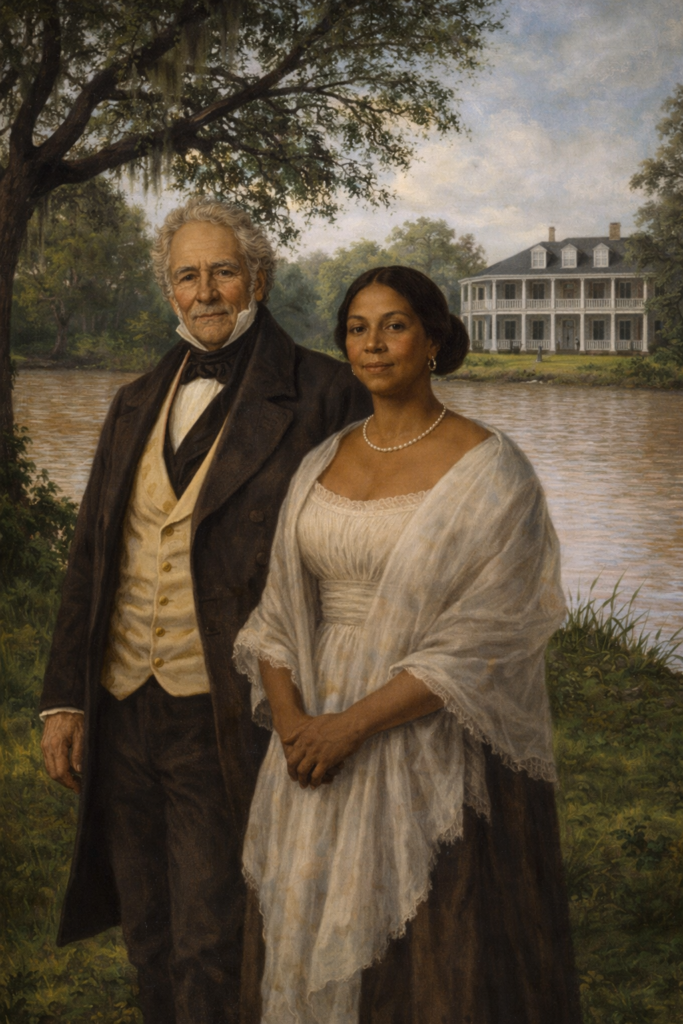
Marie Thérèse Coincoin is one of the most remarkable, and often misunderstood, figures in Louisiana Creole history.
Her story is not simple.
It is layered with contradiction, resilience, strategy, faith, and survival within a system that was never designed for her to succeed.
And yet—she did.
Who Was Marie Thérèse Coincoin?
Marie Thérèse Coincoin was born around 1742 into slavery at the colonial outpost of Natchitoches, in the household of Louis Juchereau de St. Denis.
She was the daughter of François and Marie Françoise, and one of eleven children. As a young girl, she and her sister were trained in healing practices, nursing, and pharmacology, skills that would later support her economic independence.
In early adulthood, Coincoin was placed with French merchant Claude Thomas Pierre Métoyer. Their relationship, formed within the realities of the colonial system, lasted nearly two decades and resulted in ten children.
Over time, Métoyer purchased Coincoin and several of their children and granted them freedom.
That moment changed everything.
Freedom, Strategy, and Economic Power
Freedom did not mean ease—but Coincoin used it with remarkable intention.
She began building a life through multiple income streams:
She was not just surviving.
She was strategically building wealth.
Under Spanish colonial rule, when land grant policies were more flexible, Coincoin secured land along the Red River, including a tract known as the Grand Coast. She later expanded her holdings, including cattle operations in the piney woods west of her homestead.
By the early 1800s, she was:
The Reality of Slaveholding
One of the most difficult and important truths to understand is this:
Like many free people of color in colonial Louisiana, Coincoin did acquire enslaved people.
Historical research, particularly by Elizabeth Shown Mills, indicates that many of those enslaved were family members or close relations, and in several cases, Coincoin worked to secure their freedom over time.
This does not remove the moral weight of slavery.
But it does reflect the complex and constrained choices that free people of color had to navigate within that system.
Her life must be understood in full context of the time and circumstances; no simple task as perspective has been list to time and changing influences and experiences of modern living.
The Metoyer Family & the Creation of Isle Brevelle
Coincoin’s legacy did not end with her.
It multiplied.
It took root in her children who carried forward not just what she built, but how she built it: with strategy, faith, and an unwavering commitment to family.
One of the most well-known figures is Louis Métoyer, who was granted over 900 acres of land along Cane River. On that land, he established what would become Melrose Plantation, though much of the physical structure we see today was developed later by his descendants. His work helped solidify the Metoyer presence along the river and anchor their economic influence in the region.
But to truly understand the heart of Isle Brevelle, you also have to understand another son:
Nicolas Augustin Métoyer.
Born in 1768, Nicolas was the son of Claude Thomas Pierre Métoyer and Marie Thérèse Coincoin. He was granted his freedom in 1792, the same year he married Marie Agnès Poissot, and just a few years later, in 1795, he became the founder of the Isle Brevelle community of gens de couleur libres.
And this is where the story deepens.
Nicolas was not just a landowner. He was a builder of community.
Through agriculture and landholding, he amassed significant wealth, enough to both borrow from and lend to white planters in the region. That level of economic influence was rare for a man of color at that time and speaks to both his business acumen and the foundation laid before him.
Like many in that community, he was also a slaveholder, another reminder of the complex and often uncomfortable realities of that era. Historical records indicate that many of the enslaved individuals on Isle Brevelle were eventually freed, and Nicolas himself played a role in those manumissions. This does not simplify the history, but it does provide important context for understanding the choices made within that system.
As patriarch of the Metoyer family and master of Yucca Plantation, Nicolas helped shape not only land ownership, but identity, continuity, and belonging.
And perhaps his most enduring contribution was not economic.
It was spiritual.
Nicolas donated the land for what would become St. Augustine Catholic Church, completed in 1829. His brother Louis oversaw its construction, and the community contributed its furnishings, making it a true collective effort.
St. Augustine was more than a church.
It was, and still is, a declaration.
It is recognized as one of the first Catholic churches in the United States built by and for free people of color. What began as a mission church grew into the spiritual and cultural center of Isle Brevelle.
And even today, generations later, it remains the heart of Cane River Creole life.
It is where families return.
Where stories are remembered.
Where culture is not just preserved, but lived.
A Community Built on More Than Land
What the Metoyer family established along Cane River was not just a collection of plantations.
It was a community.
A place where:
Isle Brevelle became one of the most significant communities of free people of color in Louisiana, a place where generations could live, build, worship, and belong.
And that sense of belonging still echoes today.
A Legacy That Still Lives
This history is not distant.
It is living.
Many Creole families today can trace their lineage back to Coincoin and the Metoyer family, and that reach continues to surface in modern genealogy.
For example, on the series Finding Your Roots with Henry Louis Gates Jr., WNBA star Brittney Griner discovered that her maternal ancestry connects to the Balthazar family—whose lineage ties back to the Cane River Creole community established by Coincoin and her descendants.
That is the power of this legacy.
It extends far beyond what we see on the surface.
Why This Story Matters
Marie Thérèse Coincoin’s life reflects something deeply important:
Not just resilience, but intentional, strategic resilience.
She understood the system she was in.
She made decisions that would benefit her children.
She built something that would outlast her.
And through that, she helped create a community that still exists today.
Explore More & Continue the Journey
If you want to go deeper into this history, here are trusted places to begin:
And of course, continue exploring stories, tools, and family connections at BellaCreoleLife.com, where we are working to make these histories more accessible, personal, and connected.
❤️ From Me to You
When you hear stories like Coincoin’s, it can feel distant—like history that belongs to someone else.
But it doesn’t.
There is a strong chance that her story connects to yours in ways you haven’t fully uncovered yet.
So take the time.
Ask questions.
Trace your roots.
Sit with your elders.
Because what you will find is not just history.
You will find yourself.
Until next time, cousin—
take care of yourself, take care of your people, and keep living the Bella Creole Life.
With love and intention,
Cici